Coastal Living Is Quietly Wrecking Your Driveway: Salt, UV & How Sealing Protects It
That white chalky bloom, the faster fading, the algae that won't quit — living near the beach is brutal on concrete. Here's what's happening and how to stop it.
The quick version
- Salt air and humidity drive efflorescence (white chalky salt), faster fading and quicker algae growth.
- That white bloom has to be removed before sealing, or the seal goes cloudy over it.
- Breathable, penetrating seals handle salt and moisture better than thick surface films.
- It's a genuine reason coastal driveways benefit from sealing more than inland ones.
One of the best things about the Central Coast is living near the water. Your driveway disagrees. Salt-laden air, humidity and relentless UV team up on coastal concrete in ways inland driveways never deal with — and most people don't realise what's happening until the damage is obvious.
What the salt and sun actually do
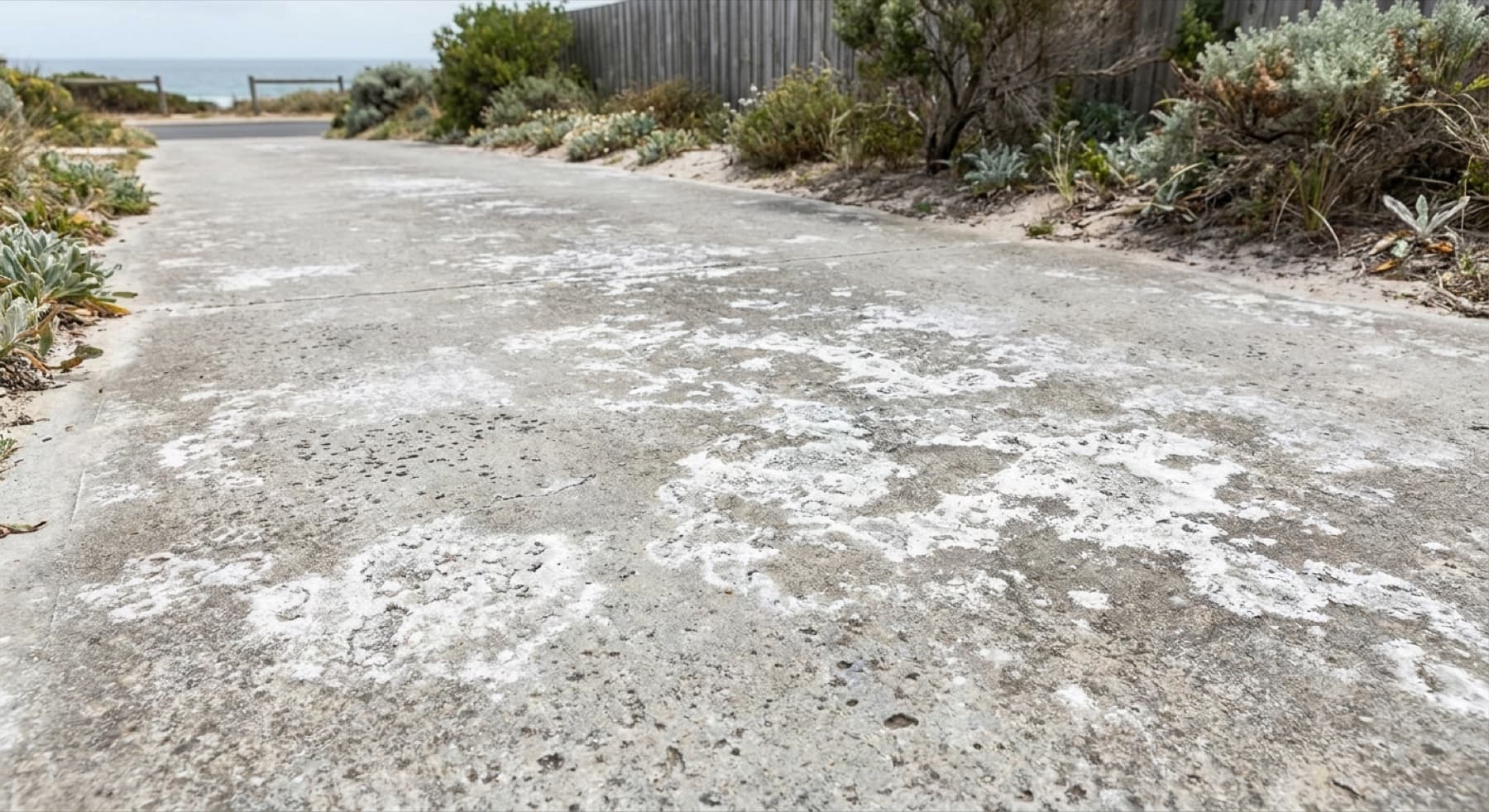
- Efflorescence — that white, chalky bloom on the surface is salts drawn up through the concrete by moisture and left behind as it dries. It's the classic coastal calling card.
- Faster fading — strong UV chalks and bleaches the colour out of concrete and coloured surfaces quicker here than almost anywhere.
- More algae, faster — humidity and salt keep the surface damp, and damp concrete grows algae and mould far more readily.
- Surface wear — over years, salt working into porous, unsealed concrete helps the surface break down and pit.
The efflorescence trap
Here's the mistake we see most: someone seals over efflorescence. The white salt bloom has to be removed first — if you seal on top of it, the trapped salt and moisture make the seal go cloudy and hazy, and you've locked the problem in. Proper prep on a coastal driveway is half the job.
How the right seal protects it
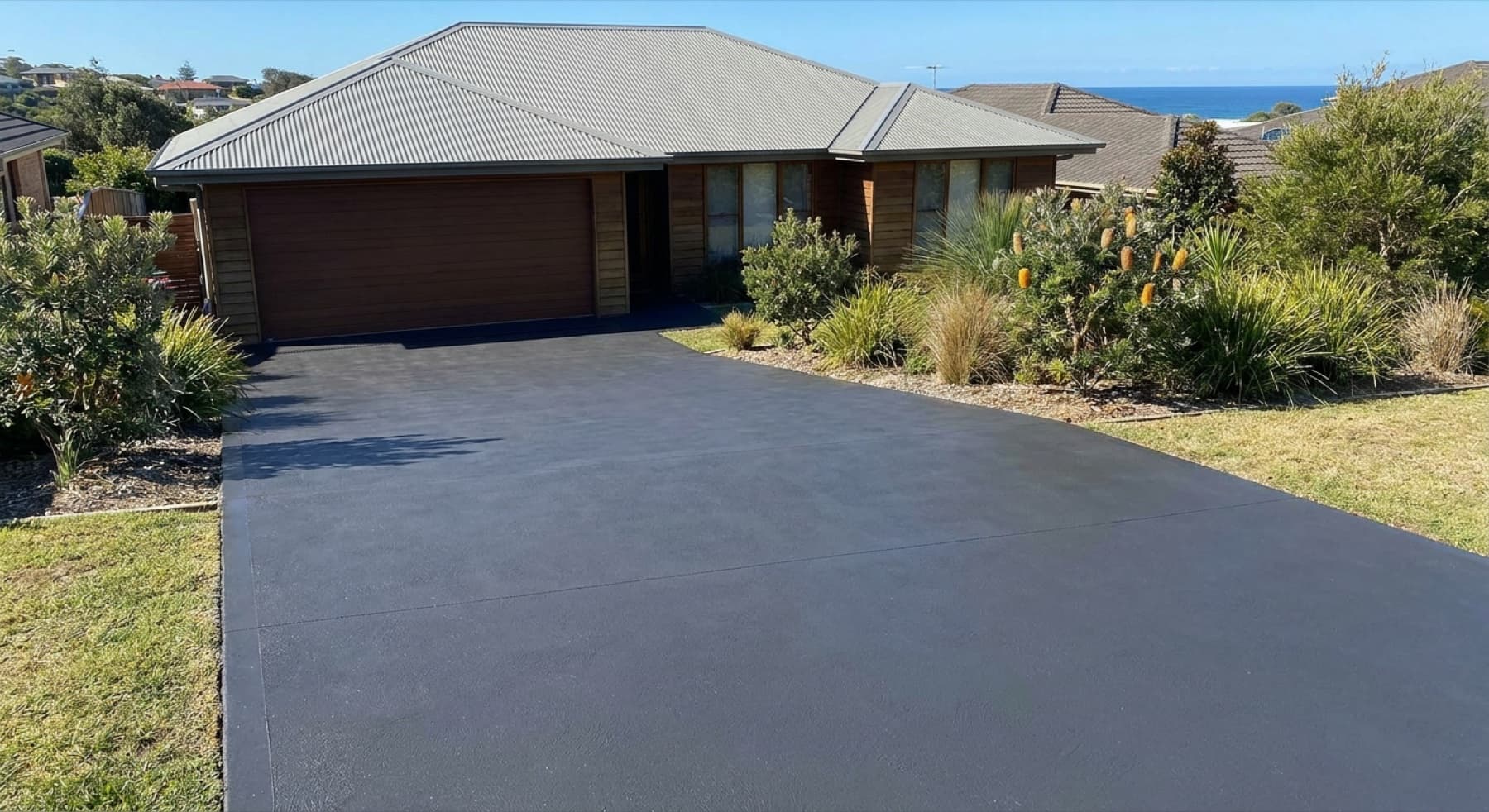
A quality seal puts a barrier between the salt, water and your concrete, so it soaks in far less and fades much slower. The key on the coast is a seal that still lets the slab breathe — trapped moisture is the enemy of any coating — which is exactly what we choose for beachside driveways at Terrigal, Ettalong, Umina and along the whole Coast.
What is the white powder on my driveway?+
It's efflorescence — mineral salts drawn out of the concrete by moisture and left on the surface as it dries. It's very common near the coast. It has to be cleaned off before sealing, not sealed over.
Does living near the beach really make a difference?+
A big one. Salt air, humidity and reflected UV all push fading, efflorescence and algae faster than inland. It's the main reason we push sealing harder for beachside homes.
Can salt damage be reversed?+
Surface salt and staining can be cleaned off, and sealing then protects against more. Deep pitting from years of neglect can be improved but not fully undone — which is why protecting it before it gets to that point is worth it.
Written by the Clean & Seal team — two brothers who clean and colour-seal driveways across the Central Coast, NSW. We wrote this from real jobs, not a brochure.