How to Clean a Concrete Driveway (Oil Stains, Algae & When to Call a Pro)
Most driveway stains have a specific fix — and blasting everything at full pressure isn't it. Here's how to tackle the common ones, and when to hand it over.
The quick version
- Match the method to the stain — oil, rust, algae and tannin each need a different treatment.
- Kill algae and mould with a biocidal cleaner and dwell time, don't just blast it.
- High pressure can damage decorative, stencil and aggregate surfaces — soft-wash those.
- Call a pro for large areas, decorative surfaces, deep stains, or if you're cleaning before sealing.
A garden hose won't touch most driveway stains, but the answer isn't just to hire the biggest pressure washer you can find and blast away — that damages some surfaces and doesn't fix others. Here's how to clean a concrete driveway the way that actually works.
Match the method to the stain
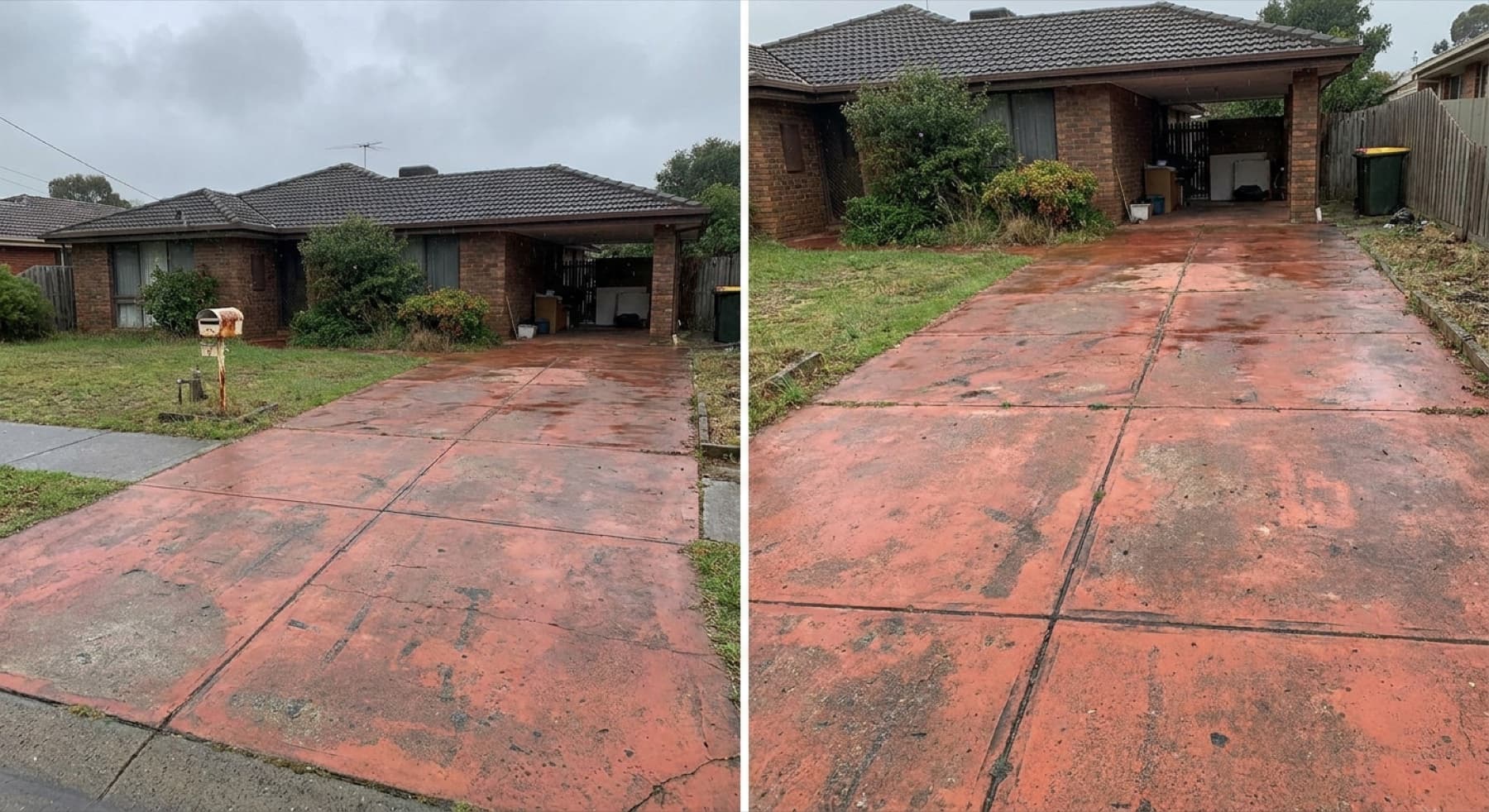
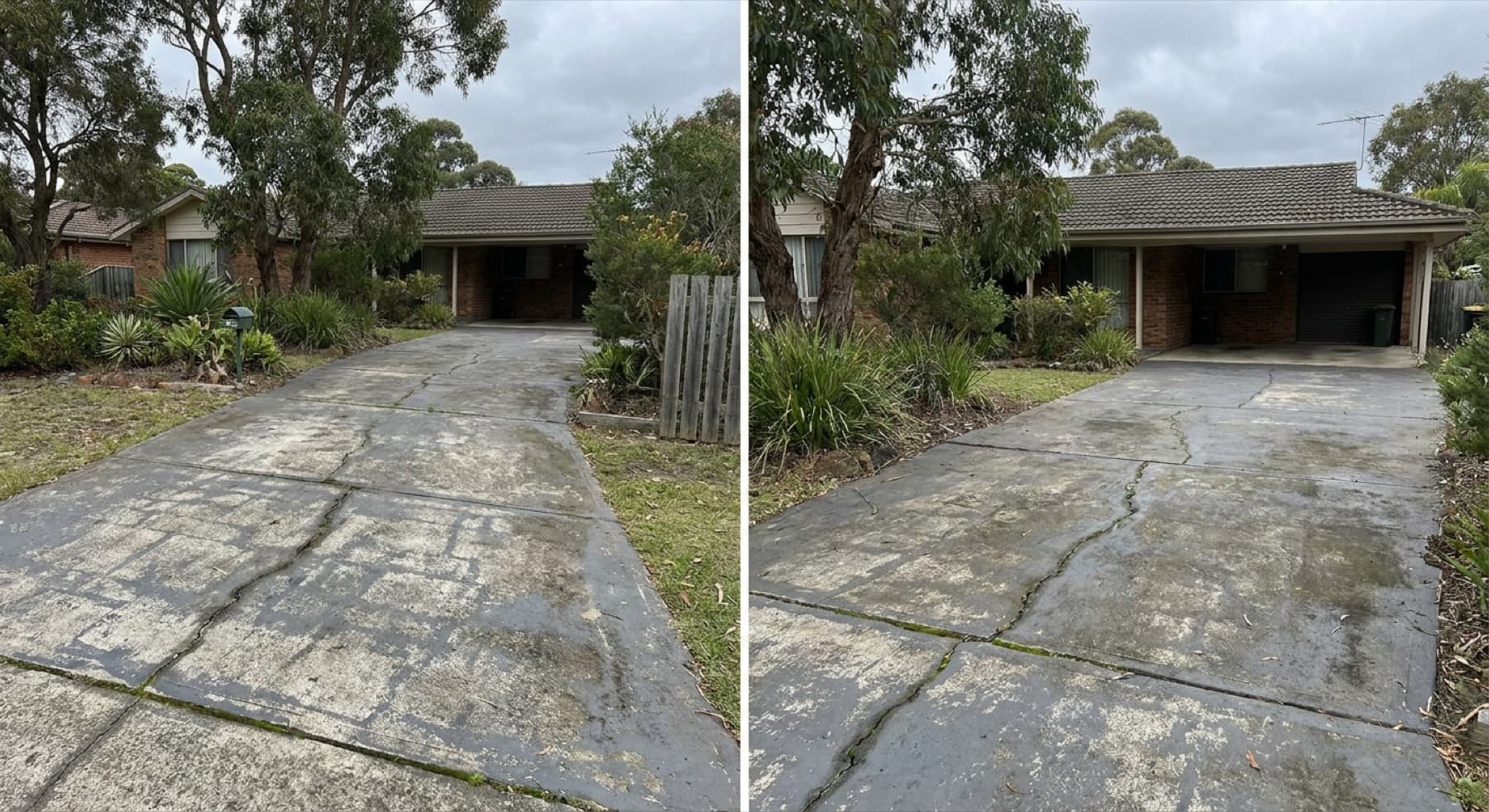
- Algae, mould & lichen (the green and black) — treat with a biocidal cleaner and let it dwell so it kills at the root, then wash. Just blasting it means it grows straight back. Keep bleach-based products off plants and pets.
- Oil & grease — soak up fresh oil, then work in a degreaser or poultice and scrub with a stiff nylon brush. Old, deep oil lightens rather than vanishing.
- Rust & battery marks — use a dedicated oxalic-acid rust remover, not a general cleaner.
- Leaf tannin & red dirt — an oxygen-bleach (oxy) cleaner and a scrub lifts most of it.
Pressure wash or soft wash?
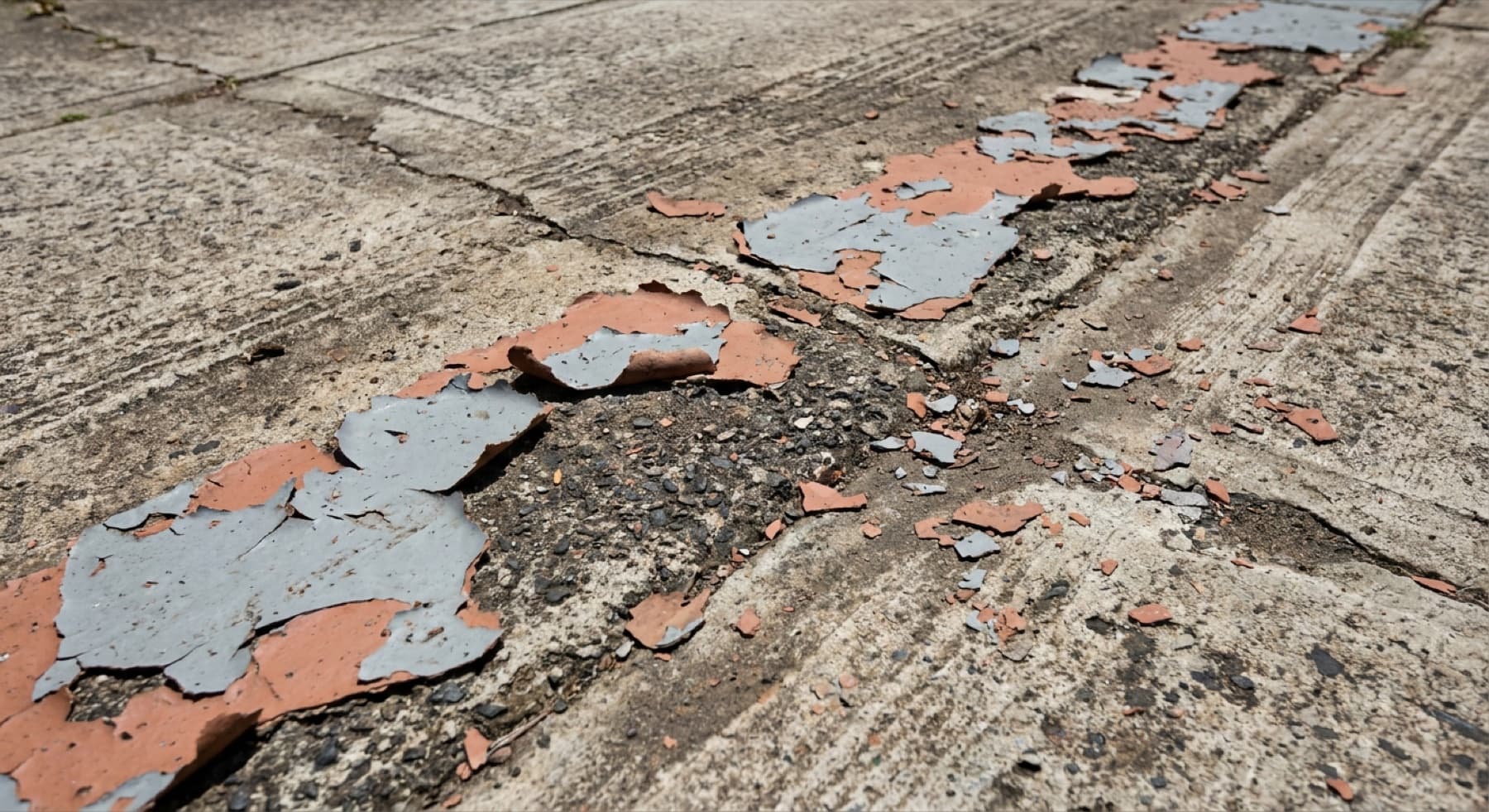
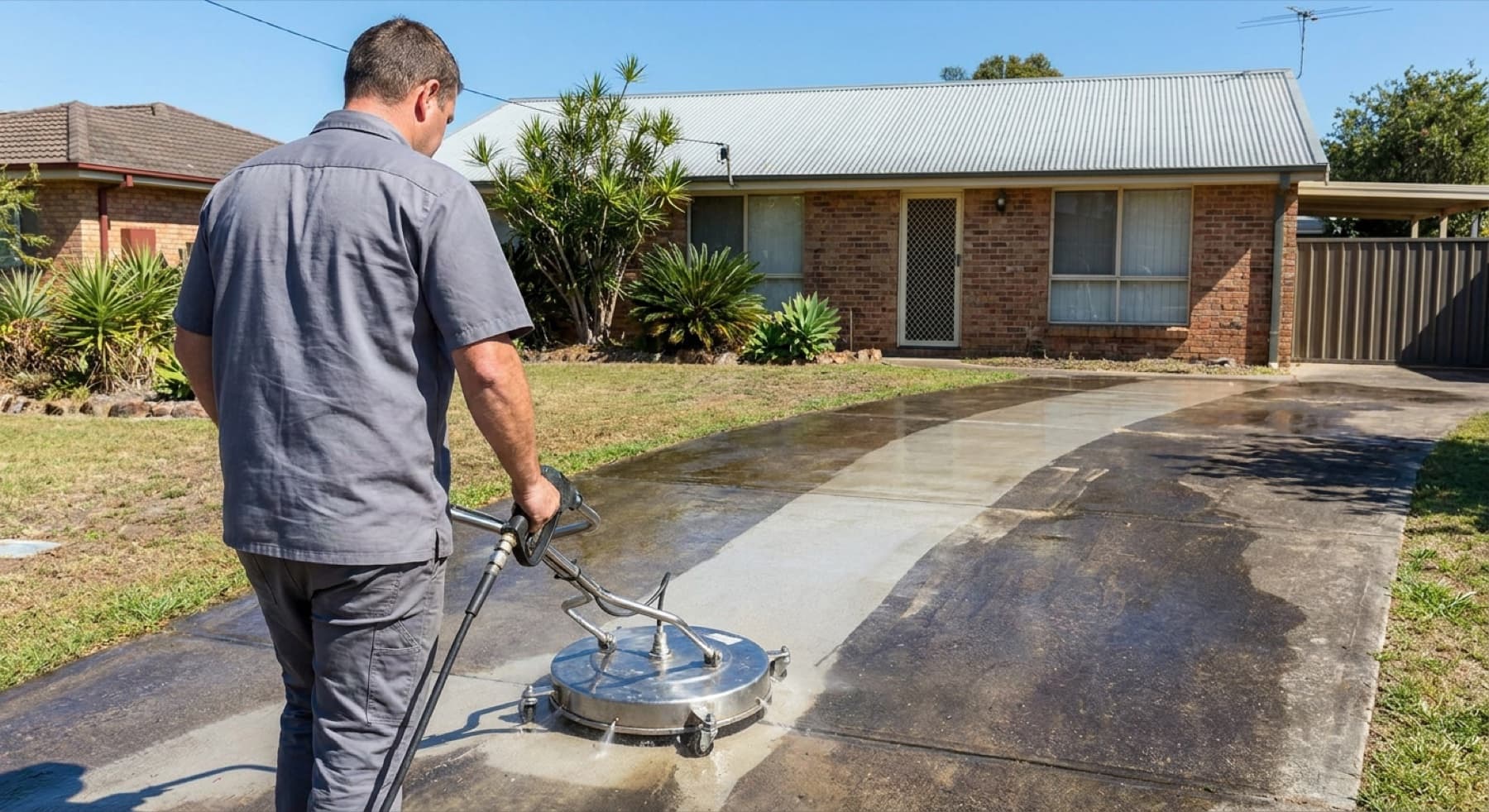
Pressure washing is force — great for grime and oil on sound plain concrete. Soft washing uses cleaning chemistry and low pressure — better for killing algae at the source and safe on decorative surfaces. The key thing to know: high pressure can etch concrete, blow out [stencil](/blog/restore-faded-stencil-concrete-driveway) grout lines and strip old sealer, so decorative, coloured and aggregate driveways should be soft-washed or cleaned at carefully controlled pressure — not blasted.
When to call a pro
DIY is fine for a small, sound plain-concrete area and a light stain. It's worth getting a professional clean when:
- It's a large driveway — hire gear rarely has the flow to do it evenly, and you get zebra striping.
- It's decorative, stencil or aggregate — the wrong pressure does real damage.
- The stains are deep or old — oil, rust and lichen that need proper treatment.
- You're cleaning to seal — the prep has to be right or the seal won't last.
Can I damage my driveway with a pressure washer?+
Yes — too much pressure etches concrete, chews up stencil grout lines and aggregate, and strips existing sealer. Sound plain concrete handles pressure well; decorative surfaces need a gentler, chemistry-first approach.
What's the best thing to clean a driveway with?+
It depends on the stain — a biocidal cleaner for algae, degreaser for oil, oxalic acid for rust, oxy cleaner for tannin. There's no single product that does everything well.
Will cleaning alone keep it clean?+
For a while. To keep it clean long-term, seal it after — a sealed surface holds far less moisture and grime and hoses off easily.
Written by the Clean & Seal team — two brothers who clean and colour-seal driveways across the Central Coast, NSW. We wrote this from real jobs, not a brochure.