How Often Should You Reseal a Concrete Driveway? (And the Signs It's Time)
There's no single magic number — but there is a realistic range and four dead-simple signs you can check yourself to know when your driveway is due.
The quick version
- As a guide, most colour and decorative seals last around 2–3 years; premium systems longer, full-sun and heavy-traffic driveways less.
- Coastal driveways work the seal harder — salt, humidity and UV shorten the cycle.
- Four signs it's due: water stops beading, the colour looks dull or chalky, algae returns fast, and wear shows in the tyre tracks.
- Resealing on time is far cheaper than letting the surface go and needing a full re-do.
Reseal too often and you're wasting money; leave it too long and the surface starts to wear, which turns a quick reseal into a bigger job. Here's how to get the timing right for a Central Coast driveway.
The realistic range
For a colour or decorative seal, a good rule of thumb is every 2–3 years, with premium systems and low-traffic driveways stretching longer, and full-sun, heavy-traffic driveways needing it sooner. It genuinely depends on your driveway — which is why the signs below matter more than any calendar.
The four signs it's time to reseal
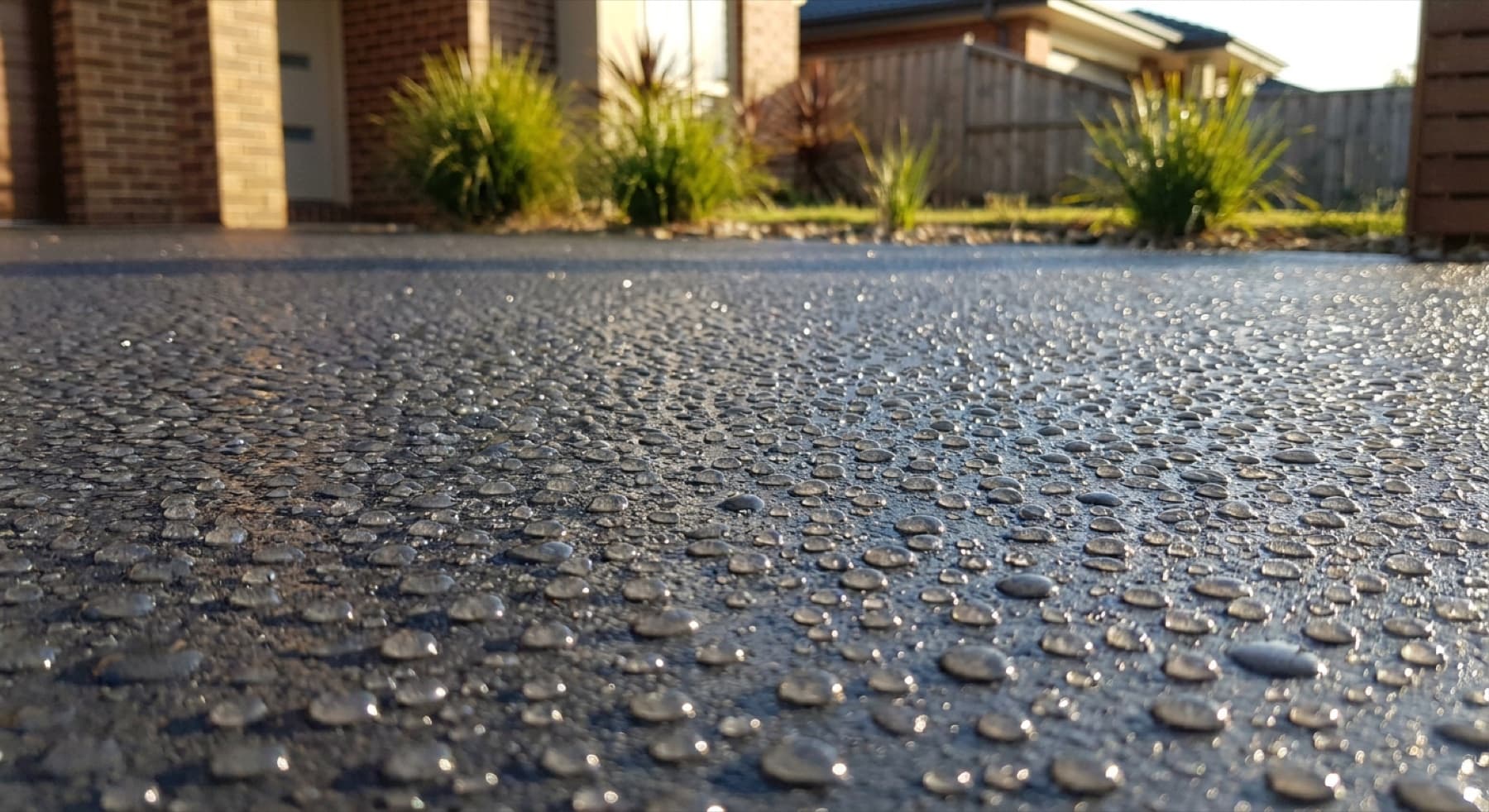
- Water stops beading — tip a bucket of water on it. If it beads and rolls off, the seal's still working. If it soaks straight in and darkens the concrete, the seal's worn through.
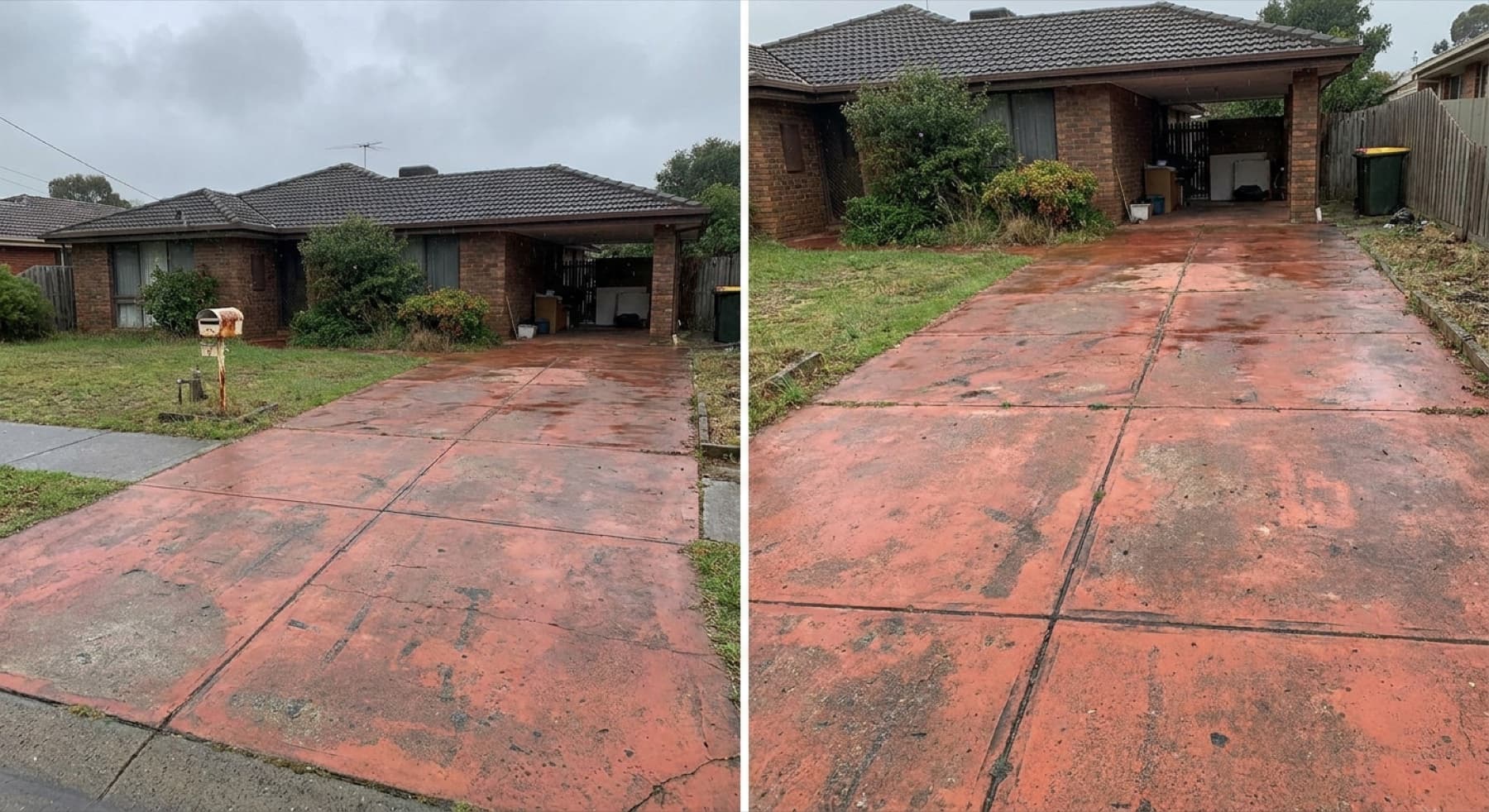
- The colour looks dull or chalky — a healthy seal has a slight sheen and rich colour. Flat, chalky or patchy means it's going.
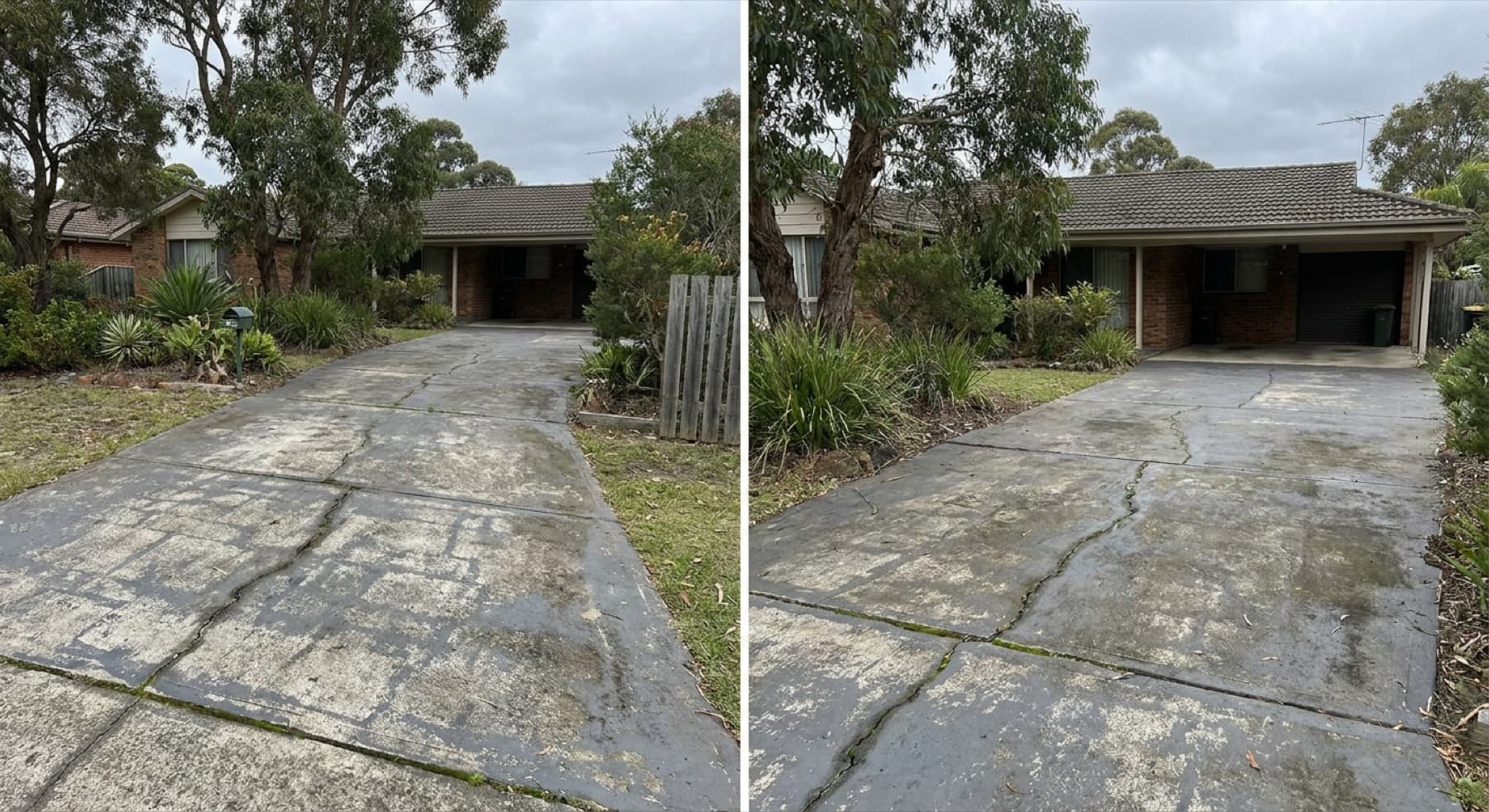
- Algae comes back fast — if the green returns within weeks of a clean, the surface is porous again and holding moisture.
- Wear in the tyre tracks — the wheel paths and turning areas always go first. Visible wear lines there are your early warning.
Why the coast is harder on the cycle
Salt air, humidity and strong UV all wear a seal faster here than inland — beachside driveways at Wamberal, Avoca or Killcare work the hardest of all. We'll give you an honest reseal window for your exact spot when we seal it.
Why resealing on time saves money
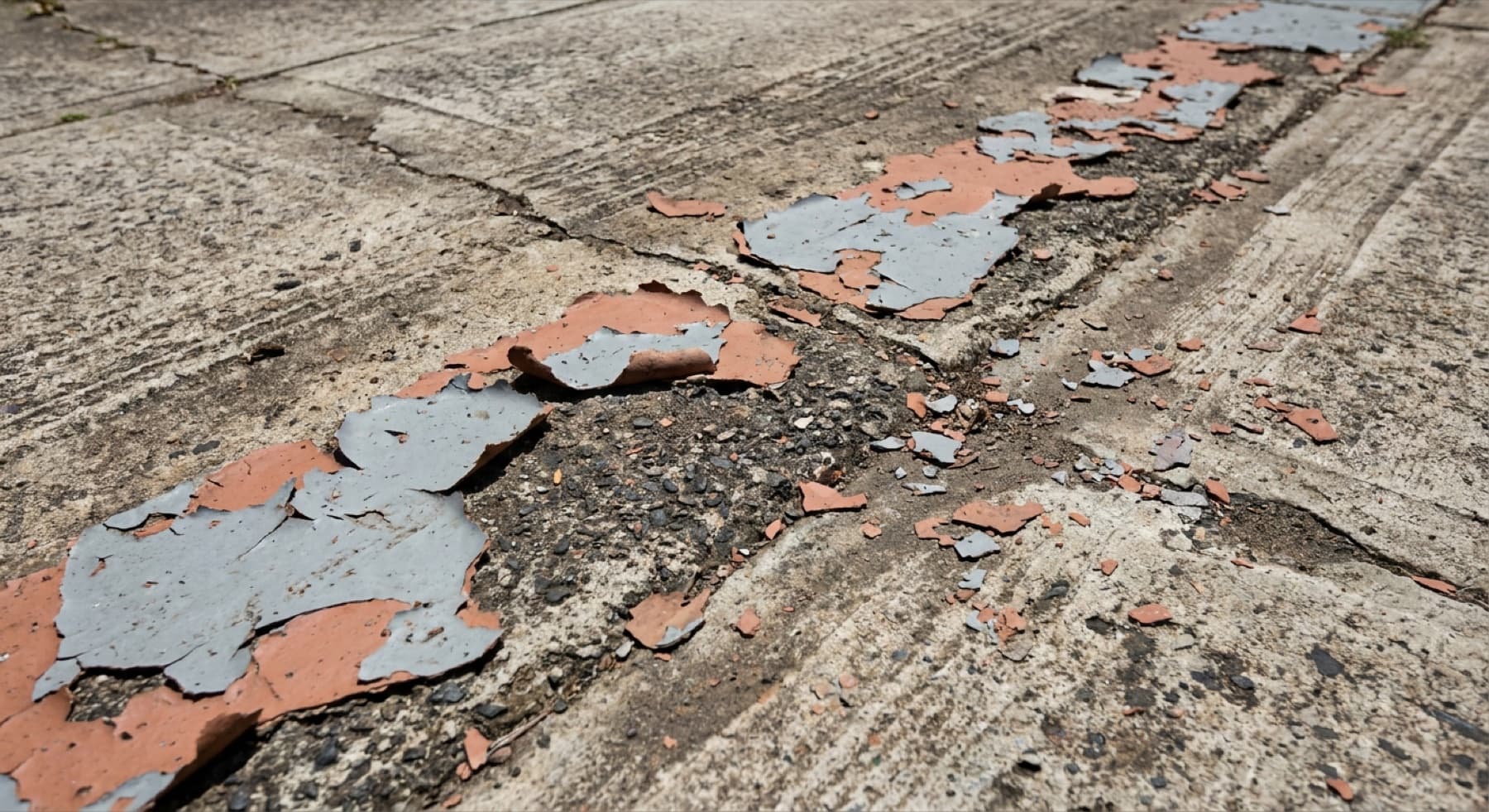
A reseal on a surface that's still sound is a straightforward clean-and-recoat. Leave it until the seal has completely failed and algae, oil and UV have got back into bare concrete, and you're looking at heavier prep and stain treatment before it can be resealed. Staying ahead of it is the cheaper path — and it means your driveway never has a tired-looking stretch.
Can I reseal it myself between professional coats?+
You can top up a clear seal yourself, but matching a colour seal evenly is where DIY jobs go patchy or cloudy. If the colour matters, it's worth having it done properly.
Does a more expensive seal last longer?+
Generally yes — higher-build and solvent-based systems tend to outlast basic topical seals, especially in sun and traffic. We'll recommend the right product for how your driveway gets used.
What happens if I never reseal?+
The surface goes back to bare, porous concrete — it fades, stains and greens up faster, and eventually needs a full clean-and-reseal rather than a simple recoat. For a coloured or stencil driveway, the look goes first.
Written by the Clean & Seal team — two brothers who clean and colour-seal driveways across the Central Coast, NSW. We wrote this from real jobs, not a brochure.